Every day more news comes about how broken our world is—politics, institutions, relationships, the environment. Sometimes it feels that everything we take for granted is collapsing. It can be a struggle to keep the faith and “press on regardless,” as my teacher, the
late Marilyn R. Waldman, often counseled.
Yet, despite the bad news, people are pressing on all around us. The other day, a friend introduced me to Arc of Appalachia. They “buy and preserve the most intact wildlands remaining in the heartland of Appalachia.” So far, they have saved 14,312
acres, mostly in southern Ohio.
I have also been thrilled to discover here in Licking County where I live groups working to improve environmental health. These include programs to restore native plants for pollinators, to study and advocate for bobcat population recovery, to restore wetlands, and a local land trust establishing conservation easements throughout the county.
All over the country, local folks are making a difference right at home. But these efforts are only a start toward long-term solutions. “The real work, the hardest work, is healing,” says Chris Tall Bear, an enrolled member of the Cheyenne & Arapaho Tribes of Oklahoma. He explains, "Healing is not about forgetting or achieving comfortable closure; it is about recognizing that trauma is not confined to the past."
Tall Bear addresses the generational traumas that continue to afflict American Indians who suffered displacements, massacres, epidemics, and persistent debilitating poverty. But his insights apply to healing the land, too. Beyond cultivating native plants, helping endangered wildlife populations to recover, and restoring wetlands and other essential ecosystems, the hardest work will be healing a traumatized earth. Past traumas stay present.
We cannot erase historical traumas, but we can work toward healing. And healing the earth also heals us. Loving care of the land and all its inhabitants is a form of self-care.
Humans are not separate from the animals and plants and fungi and microbes that share this planet with us. Helping them to thrive helps us as well and brings healing to the earth as a whole.
So, despite the onslaught of bad news, I do not despair. I am determined to press on regardless, confident that we can heal this broken world.
Kind regards,
Tom
P.S. My announcement last month about dropping poetry from the newsletter
inspired considerable response. Every single person who wrote urged me to continue featuring a poem every month. I heard you, and I am committed to including a monthly poem, starting with this edition.
Featured Photo
Cades Cove Primitive Baptist Church
(Photo by T.S. Bremer)
National parks are famous for spectacular scenery, wildlife, and outstanding recreational adventures. But virtually all of them also have
cultural histories. In fact, the human history is as important as the natural history in many parks. For instance,Great Smoky Mountains National Parkfeatures both natural attractions and intriguing cultural history.
In Cades Cove, visitors can learn about the historical community that thrived there for decades before the national park displaced the last of its residents. Even today, burial services for the community’s descendants are still held on occasion in the church
cemeteries.
News, Commentary, and other items of interest
Sacred land memorialized and preserved in perpetuity: “Today, we stand to acknowledge the atrocities committed against the Lakota people to continue to heal, to protect, to educate, and most importantly, to
ensure that we never forget the Wounded Knee Massacre of 1890.” Wounded Knee Massacre site protection bill passes Congress - ICT
A conservative-ish environmentalist: His environmental advocacy group, Nature is Nonpartisan, “aims to bring both sides of the American political spectrum
together on four key issues: forest restoration and wildfire prevention, water quality and infrastructure, natural disaster resilience, and land stewardship.” “Whose side am I on? Nature’s side” | Imagine5
The microscopic artistry of insect eggs: “It’s hard to imagine a better display of nature’s wild diversity, and its ability to keep surprising us.” Levon Biss | Phasmid eggs photo gallery | Imagine5
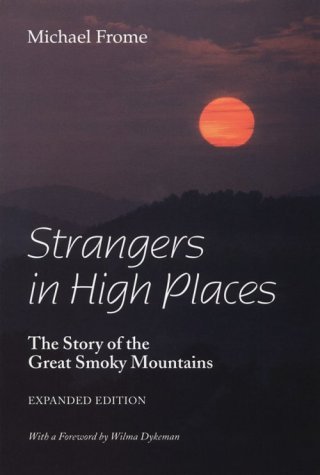
Many books have been written about the history of national parks. One of the first that I read, and still one of my favorites, is Michael Frome’s story of Great Smoky Mountains National Park. It tells not only
the natural history of the Smokies, but also poignant tales of the people who lived, worked, and died in the mountains. This includes the Cherokee people displaced by white settlers and later the white communities displaced by the national park. Originally published in 1966, Frome issued an “expanded” edition in 1994 that added 25 years to the region’s history.
A day in the park
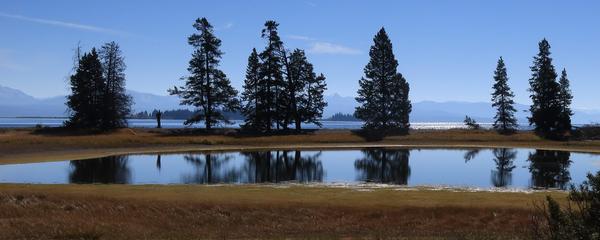
As winter deepens, you may be dreaming of warmer days and planning a national park vacation. Poet J.P. Grasser’s “Yellowstone” portrays a realistic picture of what to expect at the height of the summer season in the world’s first national park. It’s not how many people envision an ideal
national park adventure. You can hear him read it on the Terrain.org site here.
Yellowstone
We follow directions. We keep to the path. We check gate traffic and let motorhomes merge.
They buy trinkets and postcards. They eat franks with forks and with knives. We drink Moose Drool.
We suffer the bugs and live
like we’re wolves. This mud reeks of eggs. It owes us some lives.
Who’d think to blame us? Who’d dare diverge? We keep to the path. Men in hip-waders trudge out
to perform their fresh selves, swish-swishing caddis-flies, nymphs it took two winters to tie.
They
overlook brooktrout levitating at heel. We follow directions. We keep to the path.
Numbered, endless people come with plates from Alberta, shirts from Daytona, to fill pews
in plain sight of a geyser. One book to prepare you for the place claims ash will reach Jersey,
that Portland shall fall as pumice to the sea. The statehouse may yet sign the bill into law,
though in private admits gray wolves commit blessed few acts of predation; dead lambs
and dead cows make for really bad optics. These our woods, deadly, dark and deep,
where amphibious men finessing fake bugs look past the rainbows inside wet shadows.
We follow directions and keep to the path. The path here is stilted, contrived of metal
and wood, so wherever you walk, it’s a good three inches above the dirt where you tread.
– J.P. Grasser
[Source:Terrain.org, reprinted by permission of the poet.]
I would love to hear from you.
You can reach me by replying to this email or clicking on the Contact button.